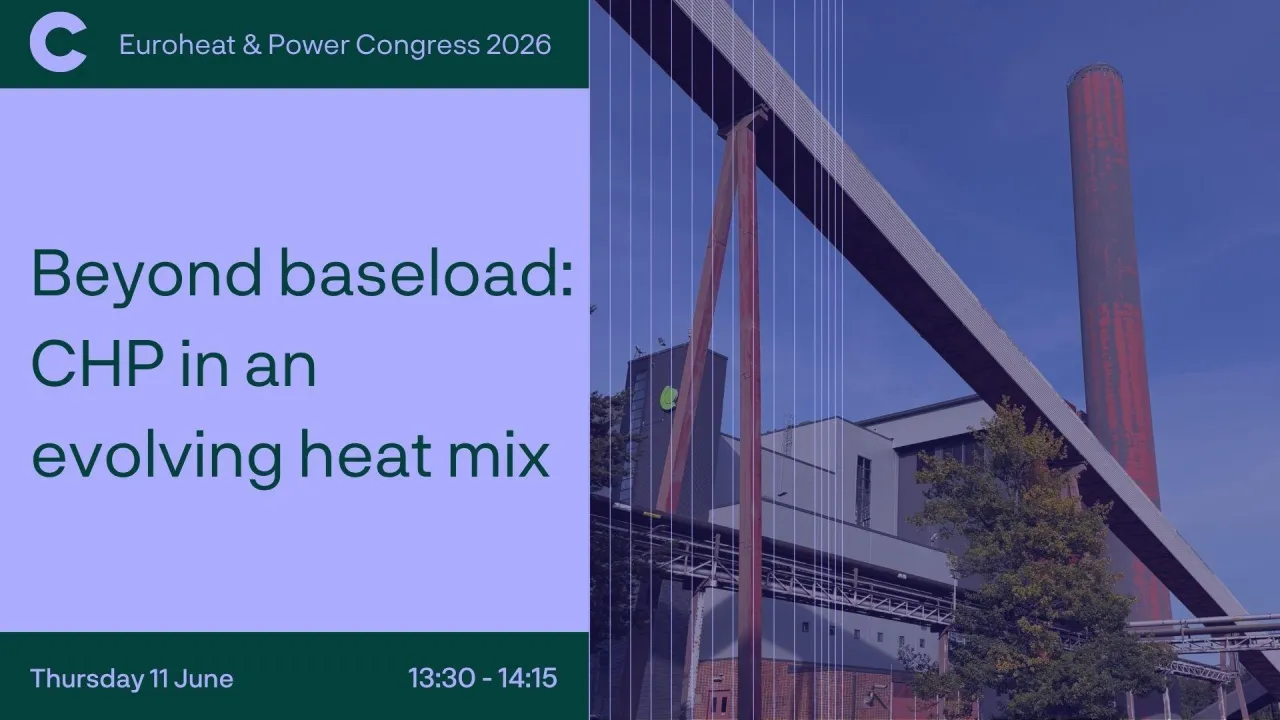
Beyond baseload: CHP in an evolving heat mix

Beyond baseload: CHP in an evolving heat mix

Thursday, June 11, 2026 1:30 PM to 2:15 PM · 45 min. (Europe/Brussels)
ICE - Session hub: floor 1
Session
Decarbonisation

Information

As cities scale waste heat, large heat pumps, geothermal and thermal storage, Combined Heat and Powers plants (CHP) is no longer the steady and efficient workhorse of DHC. It becomes a controllable, dispatchable asset in a multi-source mix: stepping in when the grid is tight, prices spike, or cold spells hit, and easing off when clean electricity and low-carbon heat can cover demand. Where does CHP deliver the best system value? How do operators optimise dispatch across heat and power markets? What does it take to keep reliability while making CHP fit for 2050?

PGE Polska Grupa EnergetycznaBooth 11The PGE Group is the largest power utility in Poland. It ensures safe and reliable electricity supplies to nearly 6 million customers and accounts for approximately 40% of Poland’s total electricity generation. PGE is also the largest district heating providerin Poland with approx. 20% of share in district heating, serving more than 2 million of householdsthrough a portfolio of large-scale combined heat and power plants and heating networks.PGE’s strategy through 2035 reaffirms its commitment to achieving climate neutrality by 2050 and outlines an ambitious investment programme covering the largest renewable energy projects in Poland, including offshore wind power. The investment plans also encompass flexible gas-fired generation capacities and energy storage solutions, as well as the development of resilient and smart distribution networks.  District heating is also a core element of our energy transition pathway. PGE prioritises the transformation of PGE Energia Ciepła’s asset base through the gradual phase-out of coal and the deployment of low- and zero-emission heat generation technologies. Planned investments focus on high-efficiency cogeneration, biomass, waste-to-energy, power-to-heat technologies like electric boilers and heat pumps, heat storage and the modernisation of district heating networks. The strategic objective is to build modern, integrated and flexible district heating systems that support decarbonisation, improve air quality and enhance the resilience of both local district heating systems and the wider energy system.

Log in

See all the content and easy-to-use features by logging in or registering!